
How Play School Boosts Creativity and Confidence in Children
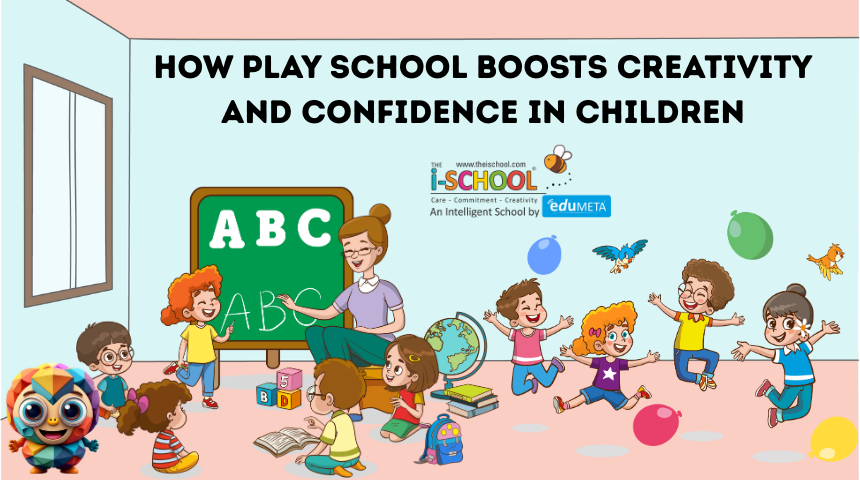
Early childhood is the foundation of a child’s personality, curiosity, and future success. This is why parents today carefully consider the right environment for their little ones to begin their learning journey. A play school is not just about ABCs and 123s; it’s about creating a space where children learn to explore, express, and grow.
At i-School, we believe that play school lays the stepping stones for two of the most important life skills: creativity and confidence. Here’s how.
1. Encouraging Imaginative Play
Play schools provide children with opportunities for imaginative play building blocks, role-play corners, and creative art activities. These experiences allow children to express ideas freely and think beyond boundaries.
👉 When a child pretends to be a doctor, a teacher, or even a superhero, they are not just playing they’re learning problem-solving, empathy, and innovation.
2. Learning Through Art and Expression
From finger painting to clay modeling, children in play schools engage in creative activities that stimulate their senses and develop fine motor skills. Art gives them the confidence to express feelings without words, while boosting imagination and focus.
👉 The freedom to “create without being judged” builds self-belief.
3. Storytelling and Language Development
Play schools often use storytelling, rhymes, and role-plays to spark creativity. Storytime helps children build language skills and confidence in speaking, while also encouraging them to imagine new worlds and characters.
👉 A child who listens today will be a confident communicator tomorrow.
4. Group Activities that Build Social Confidence
Play school classrooms are filled with group activities circle time, singing together, collaborative games that help children overcome shyness and build confidence in social interactions.
👉 By sharing, cooperating, and celebrating small wins, children develop leadership skills early.
5. A Safe Space to Try, Fail, and Try Again
In play schools, mistakes are not failures they’re part of the learning journey. Teachers use positive reinforcement to encourage children to keep trying. This nurturing environment helps children take risks, try new ideas, and develop resilience.
👉 Confidence grows when children know it’s safe to experiment.
6. Building a Growth Mindset Early
Play schools focus on effort over perfection. Celebrating small achievements like stacking blocks higher than before or reciting a rhyme instills the belief that progress matters more than comparison.
👉 This growth mindset builds a foundation for lifelong learning.
Final Thoughts
Creativity and confidence are not “extra skills” they are the very building blocks of a child’s future success. A good play school doesn’t just prepare children for formal education, it prepares them for life.
At eduMETA THE i-SCHOOL, we nurture young minds through playful learning, creativity-driven activities, and a supportive environment that makes every child feel valued and capable.
Because when children grow up creative and confident, they grow up ready to take on the world. 🌟