
Table Manners for Kids: Building Respect and Confidence at Mealtimes
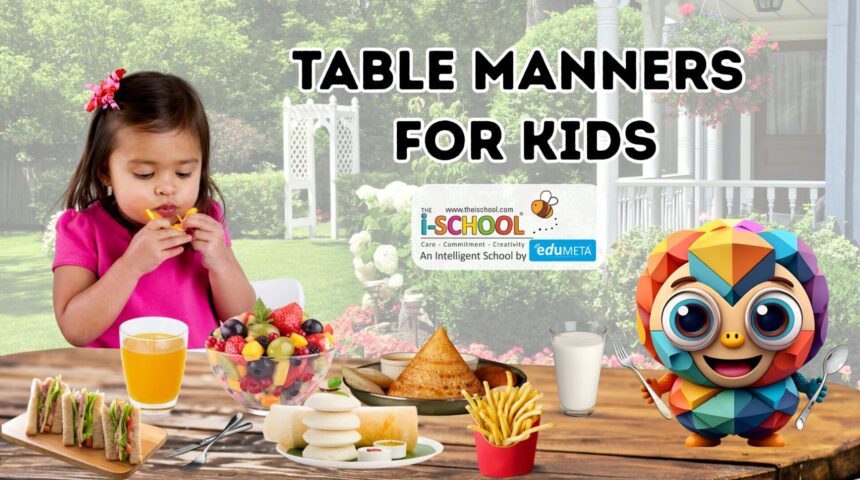
Mealtimes have always been more than just about food. For generations, families have gathered around the table to share stories, celebrate togetherness, and teach children important values. One of the most overlooked yet powerful lessons taught at the dining table is table manners.
For children, learning table manners isn’t about being “perfect” at mealtime; it’s about building habits of respect, patience, gratitude, and confidence that last a lifetime. At eduMETA THE i-SCHOOL, we believe these little lessons at home and school contribute greatly to a child’s social and emotional growth.
Why Teaching Table Manners Is Important
1. Building Respect for Food and People
When children say “please” while asking for food or “thank you” after receiving it, they learn to show gratitude. Waiting for others before starting a meal teaches them respect and consideration. These little gestures may seem small but they lay the foundation of kindness and empathy.
2. Boosting Confidence in Social Settings
Whether it’s a school lunch, a birthday party, or dining at a restaurant, children who know basic etiquette feel more at ease. They don’t worry about making mistakes because they already know how to behave politely. This confidence helps them shine in group settings and builds a strong sense of self-esteem.
3. Encouraging Healthy Eating Habits
Good manners also support better eating habits.
For example:
- Sitting properly helps with digestion.
- Chewing food slowly prevents overeating.
- Not wasting food teaches the value of resources.
These habits contribute to a healthier lifestyle both physically and mentally.
4. Strengthening Family Bonds
When mealtimes are respectful and enjoyable, children begin to associate family time with warmth and togetherness. It’s not just about eating but about building happy memories and stronger relationships.
Practical Table Manners Every Child Should Learn
Parents don’t need to overwhelm children with too many rules at once. Start simple, stay consistent, and encourage progress. Here are some age-appropriate table manners that are easy to practice:
- Wash hands before eating – Basic hygiene that sets the tone for respect.
- Wait for everyone to be served – Teaches patience and consideration.
- Sit up straight at the table – Encourages discipline and attentiveness.
- Use polite words (“please,” “thank you,” “excuse me”) – Builds courtesy.
- Chew with mouth closed and avoid talking while chewing – Encourages self-control.
- Don’t waste food – Helps children understand the value of resources.
- Clear their plate after eating – Builds responsibility and helpfulness.
How to Make Table Manners Fun for Kids
Children learn best when they enjoy the process. Instead of treating manners as strict rules, parents can make them fun through simple strategies:
- Role Modeling: Children copy what they see. If parents consistently use good manners, kids naturally follow.
- Games and Challenges: For example, “Let’s see who remembers to say thank you first!”
- Storytelling: Use stories or cartoons where characters practice good manners.
- Positive Reinforcement: Praise children when they practice a new habit correctly. Encouragement motivates them more than criticism.
Long-Term Benefits of Good Table Manners
Teaching table manners is not just about childhood, it prepares children for the future:
- They feel confident at social gatherings like weddings, parties, or school events.
- They develop discipline and patience that extend beyond mealtime.
- They gain respectful communication skills, which are vital in teamwork and leadership.
Essentially, table manners are life skills disguised as simple habits.
Final Word
At eduMETA THE i-SCHOOL, we believe education goes beyond books and classrooms. True learning is about nurturing values that shape well-rounded individuals. By teaching table manners, parents and teachers give children the gift of respect, gratitude, and confidence qualities that will help them shine in every stage of life.
Mealtime is not just about filling stomachs; it’s about filling hearts with values.
Start today, one meal at a time.🌟