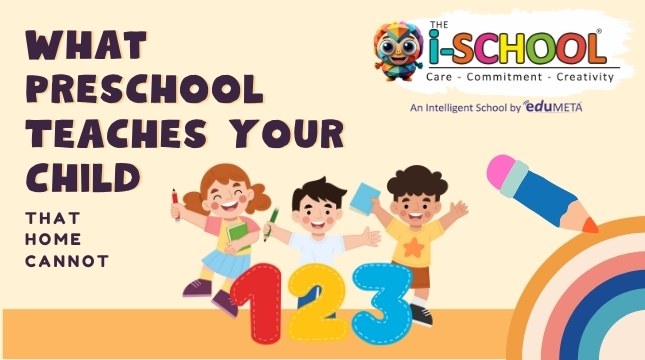
What Preschool Teaches Your Child That Home Cannot
Many parents wonder what preschool teaches their child that cannot be taught at home. After all, home is where children feel safest, most loved, and deeply supported. However, preschool offers structured experiences that go far beyond what even the most nurturing home environment can consistently provide.
In fact, what preschool teaches your child shapes emotional maturity, social confidence, independence, and learning readiness in ways that prepare children for school and life. Therefore, understanding these differences helps parents make informed decisions during their child’s early years.
Social Skills That Grow Only in a Group Setting
One of the most important aspects of what preschool teaches your child is social interaction with peers of the same age. At home, children mostly interact with adults or siblings. In contrast, preschool places them in a community of equals.
As a result, children learn how to wait their turn, resolve conflicts, share materials, and communicate their feelings clearly. Moreover, daily group activities naturally teach cooperation and empathy.
At THE i SCHOOL, structured play-based learning ensures children build these social skills gradually while feeling emotionally safe and supported.
Emotional Independence and Confidence
Another powerful element of what preschool teaches your child is emotional independence. While home provides comfort, preschool gently and positively introduces separation.
Consequently, children learn to manage emotions, express needs without constant parental support, and trust other adults. Over time, this builds confidence and resilience.
If you have already read our blog on Ten Signs Your Child Is Ready for Preschool, you will notice how emotional readiness plays a critical role in early learning success.
Learning Through Routine and Structure
Although home routines exist, they often change based on family needs. Preschool, however, follows consistent schedules that help children feel secure.
Because of this structure, what preschool teaches your child includes time awareness, task completion, and focus. Children begin to understand transitions between activities, which improves their attention span and self-control.
Similarly, our detailed guide on What Do Kids Learn in Preschool? A Complete 2025 Guide explains how structured routines support long-term learning outcomes.
Exposure to Diverse Learning Styles
At home, learning often follows one style. Preschool environments introduce multiple learning methods such as storytelling, music, movement, sensory play, and group discussions.
Therefore, what preschool teaches your child includes adaptability and curiosity. Children discover how to learn in different ways, which supports cognitive development and creativity.
At THE i SCHOOL, play-based classrooms are designed to engage visual, auditory, and kinesthetic learners equally.
Peer Learning and Healthy Competition
Another benefit of what preschool teaches your child is learning from peers. Children naturally observe others and try new skills after seeing classmates succeed.
As a result, motivation increases without pressure. Healthy competition encourages effort, persistence, and self-improvement in a balanced way.
Unlike home settings, preschool offers daily peer inspiration that boosts learning confidence organically.
Language Development in Real Situations
Parents talk to children constantly. However, preschool exposes children to varied vocabulary through conversations, stories, songs, and peer interaction.
Because of this, what preschool teaches your child includes practical communication skills. Children learn how to ask questions, express ideas, and listen actively in group settings.
This daily language exposure builds strong foundations for reading and writing later on.
Respect for Rules and Boundaries
At home, rules are flexible. Preschool introduces shared boundaries that apply equally to everyone.
Therefore, what preschool teaches your child includes respect for rules, understanding consequences, and following instructions without fear.
This helps children transition smoothly into formal schooling environments while maintaining emotional security.
Independence in Daily Tasks
Preschool encourages children to manage small responsibilities independently. These include packing bags, tidying up, eating meals, and managing belongings.
As a result, what preschool teaches your child includes self-reliance and responsibility. Children feel proud of their achievements, which strengthens self-esteem.
At THE i SCHOOL, independence is nurtured gently, without pressure, allowing children to grow at their own pace.
Exposure to Diverse Personalities and Cultures
Home environments are limited in diversity. Preschool introduces children to different personalities, habits, and backgrounds.
Consequently, what preschool teaches your child includes acceptance, adaptability, and open-mindedness. These early experiences shape emotionally intelligent individuals.
Such exposure prepares children for a multicultural world while strengthening social understanding.
Preparing for Formal Schooling
Ultimately, what preschool teaches your child is school readiness beyond academics. Children learn classroom behaviour, group learning expectations, and emotional regulation. Because of this preparation, children transition to primary school with confidence rather than anxiety.
Final Thoughts for Parents
While home provides love and values, what preschool teaches your child fills crucial developmental gaps that home alone cannot address. Preschool complements parenting by offering structured social learning, emotional growth, and real-world experiences.
If you are exploring a nurturing, play-based preschool environment, THE i SCHOOL offers thoughtfully designed programs that support holistic child development while keeping learning joyful.
Choosing preschool is not about replacing home learning. Instead, it is about strengthening your child’s foundation for lifelong success.