
How to Build Your Child’s Confidence Before They Turn 6 (2026 Parent Guide)
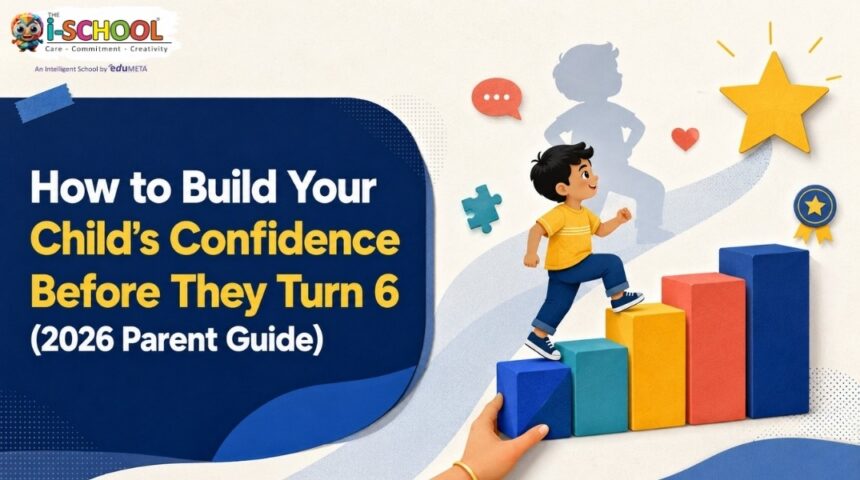
Every parent dreams of seeing their child walk into a classroom with confidence—ready to make friends, ask questions, and explore the world without fear.
But confidence isn’t something children are simply born with. It’s a skill that develops through everyday experiences, positive relationships, and opportunities to try, fail, and try again. Experts in child development consistently emphasize that confidence grows from encouragement, secure relationships, and age-appropriate independence rather than constant praise alone.
The good news?
You don’t need expensive classes or complicated parenting techniques.
The biggest confidence boosters often happen during ordinary moments at home.
In this guide, you’ll discover practical, research-backed strategies to help your child build self-confidence before the age of six—creating a strong foundation for lifelong learning, resilience, and happiness.
Why Confidence Matters Before Age 6
The early years are a critical period for brain development and emotional growth. During this time, children begin to form beliefs about themselves:
- “Can I do this?”
- “Is it okay to make mistakes?”
- “Will people listen to me?”
- “Am I capable?”
When children repeatedly experience encouragement, support, and opportunities to solve problems on their own, they gradually develop a healthy sense of self-belief. Research also shows that confidence often appears in small moments—trying a harder puzzle, speaking up, or bouncing back after a setback. (LENA)
Confidence helps children:
- Try new experiences
- Handle challenges calmly
- Make friends more easily
- Communicate openly
- Develop independence
- Become curious learners
At THE i-SCHOOL, these qualities are nurtured through play-based learning, meaningful interactions, and age-appropriate activities that encourage children to explore and grow.
- Let Them Do Things on Their Own
As parents, it’s natural to want to help.
But sometimes, helping too quickly can unintentionally send the message:
“You can’t do this without me.”
Instead, encourage your child to:
- Wear their own shoes
- Pack their school bag
- Put away toys
- Carry their water bottle
- Choose their clothes
They may take longer at first, but each small success builds confidence.
Research shows that children gain confidence when they are trusted with everyday responsibilities and opportunities to participate in family life. (UNICEF)
2. Praise Effort, Not Just Results
Instead of saying:
“You’re so smart!”
Try saying:
- “You kept trying even when it was difficult.”
- “I’m proud of how hard you worked.”
- “You didn’t give up.”
This teaches children that confidence comes from persistence, learning, and effort—not perfection.
📖 You May Also Like
What Makes a Preschool One of the Best in India? 15 Expert Factors Every Parent Should Know (2026 Guide)
https://www.theischool.com/blog/what-makes-a-preschool-one-of-the-best-in-india
- Allow Safe Mistakes
Children don’t become confident because everything goes perfectly.
They become confident because they learn:
“I made a mistake… and I can try again.”
Whether it’s spilling water, dropping a toy, or struggling to complete a puzzle, avoid rushing in immediately.
Instead, ask:
- “Would you like to try again?”
- “What do you think we could do differently?”
This helps children develop resilience, a key building block of lasting confidence.
4. Give Them Simple Choices Every Day
Confidence grows when children feel their opinions matter.
You don’t need to let them make big decisions—small, age-appropriate choices are enough.
For example:
- “Would you like the blue T-shirt or the yellow one?”
- “Do you want to read this story first or that one?”
- “Should we play outside or build blocks today?”
Making simple decisions helps preschoolers develop independence, problem-solving skills, and trust in their own judgment. Experts recommend offering manageable choices as a way to strengthen autonomy and self-confidence.
- Encourage Play That Challenges Them
Children build confidence through doing—not just watching.
Activities such as:
- Building with blocks
- Completing puzzles
- Pretend play
- Art and craft
- Outdoor obstacle courses
- Dancing
- Storytelling
allow children to experience small successes every day.
At THE i-SCHOOL, play-based learning is designed to help children explore, experiment, and solve problems independently because every new challenge completed becomes another confidence-building moment. Play-based experiences are widely recognized for improving confidence, creativity, and social development in preschoolers.
🌟 You May Also Like
What Makes a Preschool One of the Best in India? 15 Expert Factors Every Parent Should Know (2026 Guide)
- Avoid Comparing Them With Other Children
Every child develops at their own pace.
Comparisons like:
- “Look how well your cousin reads.”
- “Your friend finishes faster.”
- “Why can’t you do it like them?”
can gradually reduce a child’s confidence.
Instead, compare your child only with their own progress.
Celebrate statements like:
- “You’re getting better every day.”
- “You worked really hard.”
- “Last week this was difficult, now you can do it!”
Children thrive when they feel accepted for who they are rather than judged against others.
- Let Them Solve Small Problems
One of the biggest gifts you can give your child is the chance to think.
When your child says:
“My tower fell.”
Instead of rebuilding it immediately, ask:
- “What could we try next?”
- “How do you think we can make it stronger?”
Allowing children to struggle safely before stepping in teaches resilience and problem-solving—two qualities closely linked with lasting confidence. Psychologists note that appropriate struggle helps children develop self-belief because they discover they can overcome challenges.
- Build Confidence Through Daily Routines
Children feel secure when life is predictable.
Simple routines such as:
- Waking up at the same time
- Packing their school bag
- Helping set the table
- Reading before bed
- Tidying toys
give children a sense of responsibility and achievement.
Over time, these everyday habits become powerful confidence builders. Positive parenting guidance also highlights consistent routines as an important part of helping preschoolers become more independent.
- Celebrate Progress—Not Perfection
Confidence doesn’t come from always succeeding.
It comes from believing:
“I can keep improving.”
Celebrate moments like:
- Trying something new
- Asking a question
- Making a new friend
- Finishing a drawing
- Sharing with classmates
Even small wins deserve recognition because they encourage children to keep learning.
- Choose a Preschool That Builds Confidence Every Day
Parents play the biggest role in building confidence at home.
But the right preschool reinforces those lessons every single day.
A quality preschool encourages children to:
- Speak confidently
- Explore independently
- Ask questions
- Make decisions
- Build friendships
- Learn through play
- Celebrate effort instead of perfection
At THE i-SCHOOL, confidence is developed naturally through meaningful classroom experiences, caring teachers, play-based learning, and opportunities that help every child discover what they are capable of.
Daily Confidence Checklist for Parents
✔ Let your child complete one task independently.
✔ Praise effort instead of perfection.
✔ Allow safe mistakes.
✔ Read together for at least 10 minutes.
✔ Give your child one meaningful choice.
✔ Encourage outdoor play.
✔ Listen without interrupting.
✔ End the day by asking:
“What are you proud of today?”
Small daily moments create lifelong confidence.
Frequently Asked Questions
- At what age should parents start building confidence?
Confidence begins developing in the early years. From toddlerhood onward, children build self-belief through secure relationships, encouragement, and opportunities to try things independently.
- Can preschool help improve confidence?
Yes. High-quality preschool programs provide opportunities for children to communicate, solve problems, make friends, and participate in activities that strengthen confidence.
- Is praising children always good?
Praise is most effective when it focuses on effort, persistence, kindness, and learning rather than only outcomes or labels like “smart.”
- How can parents build confidence at home?
Simple daily habits—giving children choices, encouraging independence, reading together, allowing safe mistakes, and celebrating progress—help build lasting confidence.
- What role does play have in confidence building?
Play allows children to explore, solve problems, express themselves, and experience success in a safe environment, making it one of the strongest tools for building self-confidence.
Final Thoughts
Confidence isn’t something children magically develop overnight.
It grows through everyday conversations, opportunities to try, supportive guidance, and the freedom to learn from mistakes.
Every time your child ties their own shoelaces, speaks up in class, comforts a friend, or proudly says, “I did it!”, they’re building a foundation that will support them for years to come.
As parents, your encouragement matters.
And when those efforts are supported by a nurturing preschool environment, children gain the confidence to explore, learn, and believe in themselves.