
Fine Motor Skills vs Gross Motor Skills: A Complete Parent Guide (2026)
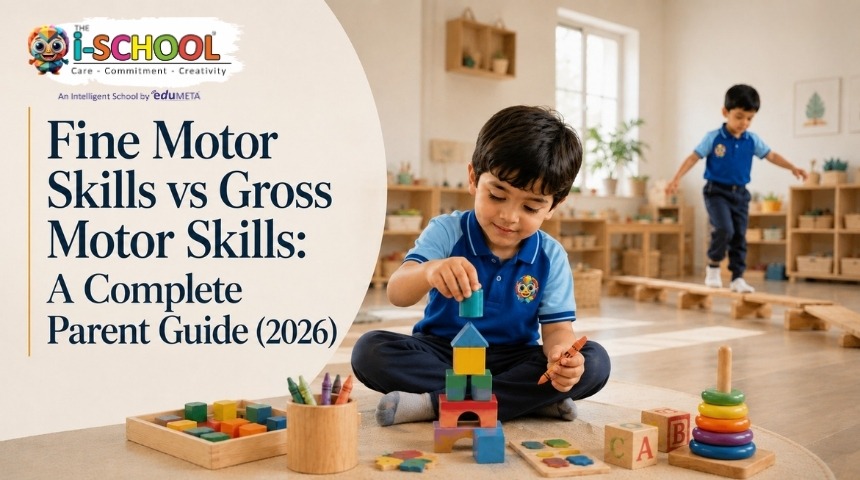
Have you ever watched your child carefully button their shirt, hold a crayon, climb a playground ladder, or kick a football across the park?
To adults, these seem like ordinary childhood moments.
But behind each of these simple actions is an incredible process of growth and development.
Every time a child stacks blocks, colours inside a picture, jumps over a puddle, or zips up their school bag, they’re strengthening an important set of skills that will support them throughout life.
These are known as fine motor skills and gross motor skills.
Although both are equally important, many parents aren’t sure what they actually mean—or why developing one without the other can affect a child’s confidence, independence, and readiness for school.
Understanding the difference isn’t just helpful for preparing your child for preschool.
It helps parents recognise how everyday play builds essential life skills, from writing and drawing to running, climbing, balancing, and even getting dressed independently.
Research shows that motor development during the preschool years is closely connected with cognitive, social, and academic growth. Strong motor skills support classroom participation, self-care, confidence, and readiness for later learning.
At THE i-SCHOOL, we believe children learn best when they are free to move, explore, create, and discover. That’s why our learning environment combines activity-based experiences with purposeful play to help children strengthen both fine and gross motor skills naturally. Our play-based approach encourages children to build these skills through meaningful, hands-on experiences rather than repetitive drills.
In this guide, you’ll learn:
- What fine motor skills are
- What gross motor skills are
- The key differences between them
- Why both are essential before primary school
- Simple activities parents can do at home
- How preschool helps children develop these skills every day
Let’s start with the basics.
What Are Fine Motor Skills?
Fine motor skills involve the small muscles of the hands, fingers, wrists, and eyes working together with precision.
These skills allow children to complete tasks that require control, coordination, and accuracy.
Think about how many times your child uses these muscles every day.
When they:
- Hold a pencil
- Colour a picture
- Turn the pages of a book
- Use safety scissors
- Thread beads
- Button a shirt
- Zip a jacket
- Build with small blocks
- Pick up tiny objects
- Open their lunch box
…they’re strengthening their fine motor skills.
These seemingly small actions prepare children for much bigger milestones later, such as handwriting, drawing, self-care, and using classroom tools confidently.
Parents often assume handwriting begins when a child first picks up a pencil.
In reality, handwriting starts much earlier.
It begins when children squeeze play dough, stack blocks, tear paper, paint with brushes, and explore different textures using their hands.
These playful activities develop the finger strength, grip, coordination, and hand-eye control needed for writing.
Signs Your Child’s Fine Motor Skills Are Developing Well
Your preschooler may be developing age-appropriate fine motor skills if they can:
- Hold crayons comfortably.
- Turn book pages one at a time.
- Build towers using blocks.
- Feed themselves with a spoon or fork.
- Open and close containers.
- Draw simple shapes.
- String large beads.
- Complete basic puzzles.
- Button or unzip clothing with some assistance.
Every child develops at their own pace, so it’s normal for these milestones to appear gradually rather than all at once.
Related Reading
Children strengthen these skills naturally through meaningful activities—not memorisation.
Read next:
Benefits of Activity-Based Learning in Preschool
https://theischool.com/blog/benefits-of-activity-based-learning-in-preschool/
You’ll also enjoy:
Play-Based Learning in Preschools: Why It Is the Future of Education in India (2026 Guide)
https://theischool.com/blog/play-based-learning-in-preschools-why-it-is-the-future-of-education-in-india-2026-guide/
Both articles explain how hands-on experiences build children’s physical, cognitive, and social development far more effectively than rote learning.
What Are Gross Motor Skills?
While fine motor skills focus on small muscle movements, gross motor skills involve the large muscles of the body.
These muscles help children perform movements that require balance, strength, coordination, posture, and overall body control.
From the moment children begin crawling, standing, walking, and running, they’re developing their gross motor abilities.
Every visit to the playground becomes an opportunity to strengthen these skills.
Activities such as:
- Running
- Jumping
- Climbing
- Skipping
- Hopping
- Throwing a ball
- Catching
- Dancing
- Riding a tricycle
- Balancing on one foot
all contribute to healthy gross motor development.
These movements do much more than improve physical fitness.
Strong gross motor skills help children participate confidently in classroom activities, sports, outdoor play, and daily routines while supporting coordination, balance, and body awareness. Experts recommend regular active play because it contributes to both physical and cognitive development during the preschool years.
Fine Motor Skills vs Gross Motor Skills: Which Is More Important?
If you’re wondering whether your child should focus more on handwriting practice or outdoor play, the answer might surprise you.
Neither skill is more important than the other.
Fine motor skills and gross motor skills work together, and healthy child development depends on both.
Think of them as two teammates.
Gross motor skills provide the strength, balance, posture, and body control that children need to sit comfortably, move confidently, and participate in physical activities.
Fine motor skills build the precision needed to write, draw, button clothes, hold a spoon, use scissors, and complete many everyday tasks.
A child who has excellent fine motor control but struggles with balance may find it difficult to sit comfortably for longer classroom activities.
Similarly, a child who runs, climbs, and jumps confidently may still struggle with writing or cutting if their hand muscles haven’t developed enough.
Early childhood experts explain that physical development is interconnected. Large-muscle movements and small-muscle coordination develop alongside one another through active play and meaningful daily experiences.
Fine Motor Skills vs Gross Motor Skills: A Quick Comparison
| Fine Motor Skills | Gross Motor Skills |
| Uses small muscles in fingers, hands, and wrists | Uses large muscles in arms, legs, back, and core |
| Helps with writing, colouring, buttoning, and cutting | Helps with running, jumping, climbing, balancing, and throwing |
| Builds hand-eye coordination | Builds body coordination and balance |
| Supports classroom readiness | Supports physical confidence and independence |
| Develops through art, puzzles, beads, clay, and drawing | Develops through outdoor play, dancing, sports, obstacle courses, and playground activities |
Why Both Skills Matter Before Starting Preschool
Many parents think preschool is mainly about learning the alphabet and numbers.
In reality, children also spend a large part of their day using both fine and gross motor skills.
Imagine a typical morning at preschool.
A child might:
- Hang their school bag independently.
- Open their lunch box.
- Colour a picture.
- Join circle time.
- Dance with classmates.
- Build with blocks.
- Climb outdoor play equipment.
- Cut paper for an art activity.
- Pack away classroom materials before going home.
Every one of these activities strengthens motor development.
That’s why quality preschools focus on learning through movement, not just worksheets.
At THE i-SCHOOL, children experience a balanced combination of indoor and outdoor learning. From creative art projects and sensory play to movement games and obstacle courses, every activity is designed to support physical, cognitive, social, and emotional development together.
Related Reading
Discover how everyday activities become powerful learning experiences in our guide:
Benefits of Activity-Based Learning in Preschool
https://theischool.com/blog/benefits-of-activity-based-learning-in-preschool/
You’ll also enjoy:
Play-Based Learning in Preschools: Why It Is the Future of Education in India (2026 Guide)
10 Fun Fine Motor Activities Parents Can Try at Home
The best part about developing fine motor skills?
You don’t need expensive toys.
Most activities can be done using everyday household items.
1. Play Dough Creations
Rolling, squeezing, pinching, and shaping dough strengthens the small muscles in children’s hands while improving finger control. Occupational therapists frequently recommend this activity because it prepares children for writing and self-care tasks.
2. Threading Beads
Large beads and thick strings improve hand-eye coordination, concentration, and precision.
3. Paper Tearing and Collage
Tearing coloured paper into small pieces strengthens finger muscles while encouraging creativity.
4. Safe Scissor Practice
Cutting along straight and curved lines develops bilateral coordination and control.
5. Sticker Activities
Peeling and placing stickers improves pincer grip and finger dexterity.
6. Building with Blocks
Small construction blocks encourage careful hand movements while strengthening spatial thinking.
7. Painting with Brushes
Painting develops wrist stability and hand control while allowing children to express creativity.
8. Clothespin Games
Pinching clothespins onto cardboard or containers is a fun way to build finger strength.
9. Pouring Water
Transferring water between cups improves coordination and independence.
10. Button and Zip Practice
Encouraging children to dress themselves develops practical life skills alongside fine motor control.
Experts in early childhood education note that creative, hands-on experiences such as loose-parts play, art, cutting, and manipulating small objects strengthen both physical readiness and later academic skills.
10 Gross Motor Activities That Build Strength and Confidence
Gross motor development happens best when children are free to move.
Here are some enjoyable ways to encourage movement every day.
1. Obstacle Courses
Use cushions, chairs, tunnels, and hoops to create simple indoor or outdoor challenges.
2. Dancing
Music naturally improves rhythm, coordination, and balance.
3. Hopscotch
Excellent for jumping, balance, and body control.
4. Ball Games
Throwing, catching, and kicking strengthen coordination and reaction time.
5. Nature Walks
Walking on grass, sand, or uneven paths helps children develop balance and body awareness.
6. Animal Walks
Try bear walks, crab walks, or frog jumps to strengthen the core and improve coordination.
7. Playground Climbing
Monkey bars, climbing frames, and ladders build upper-body strength and confidence.
8. Jump Rope
A simple activity that improves timing, coordination, and endurance.
9. Balance Challenges
Walking along a line or low beam develops stability and focus.
10. Free Outdoor Play
Sometimes the best activity is simply giving children time to run, climb, imagine, and explore.
Research consistently shows that active play supports not only physical development but also attention, confidence, and readiness to learn.
Related Reading
If you’re preparing your child for preschool, don’t miss:
10 Signs Your Child Is Ready for Preschool
https://theischool.com/blog/10-signs-your-child-is-ready-for-preschool/
This guide explains how physical, social, emotional, and communication skills work together to help children transition confidently into preschool.
How Does THE i-SCHOOL Help Children Develop Both Fine and Gross Motor Skills?
A child’s motor development doesn’t happen during one activity or one lesson.
It develops throughout the day.
Every puzzle they complete.
Every picture they colour.
Every song they dance to.
Every obstacle they climb.
Every story they act out.
Every game they play with friends.
That’s why choosing the right preschool environment matters.
At THE i-SCHOOL, we believe children shouldn’t spend their early years sitting at desks for long periods.
Instead, they should move, create, explore, imagine, and discover.
Our play-based and activity-based learning approach naturally strengthens both fine motor skills and gross motor skills every single day.
Here’s how we do it:
Creative Art & Craft
Children paint, colour, tear paper, fold, paste, mould clay, and create craft projects.
These activities strengthen finger muscles, improve hand-eye coordination, and prepare children for writing.
Sensory Play
Children explore sand, water, textures, beads, rice, and natural materials.
Sensory experiences improve finger control while encouraging curiosity and creativity.
Outdoor Play
Running.
Jumping.
Climbing.
Balancing.
Throwing.
Catching.
These activities build body strength, coordination, confidence, and physical independence.
NAEYC recommends giving preschoolers daily opportunities to engage in a wide variety of large-motor experiences because these activities help develop balance, coordination, strength, and sensory-motor integration.
Music & Movement
Dance, action songs, rhythm games, yoga, and movement activities improve posture, body awareness, and coordination while making learning enjoyable.
Practical Life Activities
Simple classroom routines such as:
- packing bags
- opening lunch boxes
- pouring water
- arranging classroom materials
help children become more independent while strengthening everyday motor skills.
These real-life tasks also improve confidence because children begin believing,
“I can do this myself.”
When Should Parents Be Concerned?
Every child develops differently.
Some children naturally develop certain skills earlier, while others simply need more time and practice.
However, if your preschooler consistently struggles with activities such as:
- holding crayons
- climbing stairs
- balancing
- jumping
- catching a ball
- using scissors
- feeding themselves
- buttoning clothes
it’s worth discussing these observations with your child’s teacher or pediatrician.
Early identification doesn’t mean something is wrong.
It simply allows children to receive the right support at the right time.
Remember:
Development is not a race.
It’s a journey.
Frequently Asked Questions
What is the difference between fine motor skills and gross motor skills?
Fine motor skills involve the small muscles in the hands and fingers for tasks like writing, drawing, buttoning clothes, and using scissors.
Gross motor skills involve the large muscles of the body for activities such as running, jumping, climbing, balancing, and throwing a ball. Both are essential for healthy child development.
At what age do fine and gross motor skills begin developing?
Motor development starts from infancy and continues throughout childhood.
Between the ages of 2 and 6, children make rapid progress in both fine and gross motor abilities through active play, exploration, and daily routines.
How can parents improve fine motor skills at home?
Simple everyday activities are often the most effective.
Try:
- Playing with clay or playdough
- Drawing and colouring
- Stringing beads
- Building blocks
- Using child-safe scissors
- Buttoning and zipping clothes
- Helping in the kitchen
NAEYC recommends these kinds of hands-on experiences because they strengthen hand muscles while preparing children for everyday tasks and later writing skills.
Why are gross motor skills important before primary school?
Strong gross motor skills help children develop posture, balance, coordination, body awareness, and endurance.
These abilities support classroom participation, playground activities, sports, and even fine motor tasks like sitting comfortably while writing.
Final Thoughts
As parents, it’s easy to celebrate the big milestones—your child’s first word, first drawing, or first day at preschool.
But some of the most important milestones are much quieter.
The first time they button their own shirt.
The first time they confidently climb the playground ladder.
The first time they hold a pencil correctly.
The first time they proudly say,
“I did it myself.”
Those moments are about much more than physical development.
They’re building confidence, independence, problem-solving skills, and a lifelong belief in their own abilities.
Fine motor skills and gross motor skills aren’t separate parts of childhood.
Together, they form the foundation that helps children learn, explore, create, and grow with confidence.
At THE i-SCHOOL, we nurture these abilities through meaningful play, hands-on experiences, creative exploration, and a child-centred learning environment where every activity is designed to help children become confident learners—not just successful students.